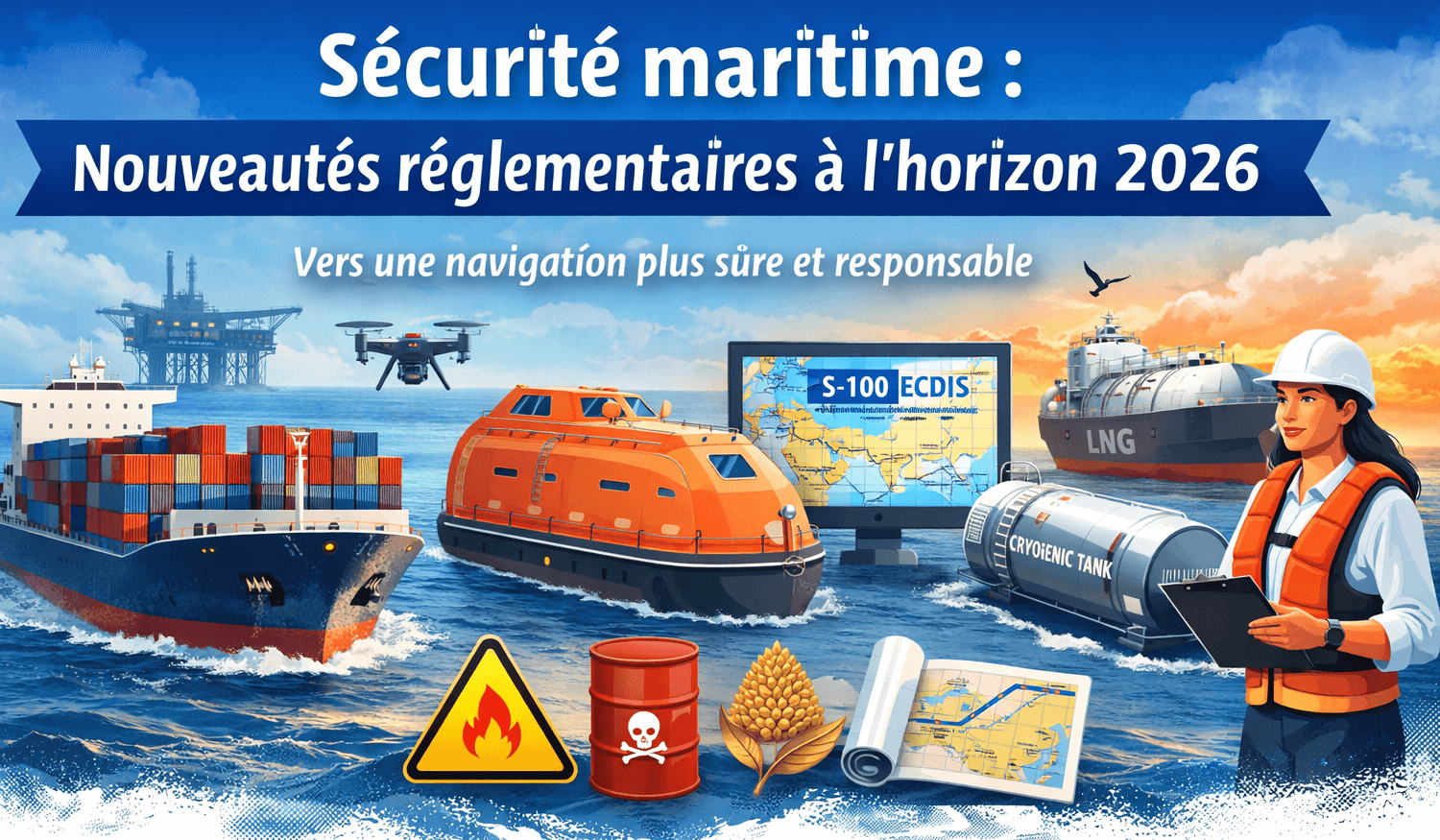
IMO Rules that Entered into Force on 1 January 2026
As of 1 January 2026, the maritime sector enters a new regulatory phase with the entry into force of several major resolutions adopted by the IMO. These changes address both environmental protection — with the mandatory reporting of lost containers and the ban on PFOS — the safety and well-being of crews, notably through mandatory training against harassment and bullying, as well as the operational safety of ships, reinforced by new requirements for alternative fuels and the installation of electronic inclinometers. Updates to key technical codes, such as the IMDG Code and the IGF Code, confirm the scope of this regulatory evolution. Together, these measures mark an important turning point for seafarers, shipping companies and the entire international logistics chain.
The information below and the related IMO circulars can be consulted on the IMO’s website at the following link: https://www.imo.org/fr/mediacentre/pressbriefings/pages/raft-of-shipping-rules-in-force-from-1-january-2026.aspx
Mandatory reporting of lost containers
The new rules on the mandatory reporting of lost containers, incorporated into the MARPOL and SOLAS conventions, entered into force on 1 January to address a major issue: a container lost overboard poses a serious risk to navigation, crew safety and the protection of the marine environment.
Application: To all ships carrying containers and to ships observing drifting containers.
MARPOL: Amendments to Article V of Protocol I now specify that any loss of container(s) must be reported in the report required by Article II(1)(b). This report must be prepared in accordance with SOLAS requirements, which harmonize procedures and ensure rapid, standardized transmission of information.
SOLAS: Amendments to Chapter V strengthen the obligations of the master in the event of the loss of one or more containers. The master must now:
Immediately inform nearby ships:
Notify the nearest coastal State;
Transmit details to the flag State, which is responsible for reporting the incident to the IMO.
Regulation 32 has also been updated to specify the information to be communicated: exact position, number of containers lost, and any details useful for ensuring navigational safety.
Prevention of and response to bullying, harassment and sexual assault
Amendments to the STCW Code now strengthen mandatory training to prevent and address violence and harassment at sea, including sexual harassment, bullying and assault. These new requirements, incorporated into table A-VI/1-4 on personal safety and social responsibilities, establish mandatory minimum competencies for all seafarers. They aim to ensure that each crew member is able to recognize, understand and report such behavior, while knowing how to prevent incidents and respond appropriately when they occur.
By strengthening this basic training, the objective is to create a safer, more respectful and more protective working environment on board ships.
Enhancing safety by improving the training and certification of fishing vessel personnel
Since 1 January 2026, amendments to the STCW-F Convention (1995) and the new mandatory STCW-F Code have been in force. These changes result from an in-depth review of the existing framework to adapt training requirements to the current realities of the fishing sector.
The central objective is to introduce harmonized qualification standards and establish a minimum level of competence for all personnel working on board fishing vessels covered by the Convention. The revised annex to the Convention now forms the legal basis for applying the mandatory technical standards defined in Part A of the STCW-F Code.
Part B of the Code, meanwhile, provides practical guidance to facilitate consistent implementation of the requirements, particularly for entities responsible for the training, certification and assessment of fishers.
Safety of lifting appliances and on-board anchor handling winches
A new SOLAS regulation, II-1/3-13, now introduces comprehensive requirements for lifting appliances and anchor handling winches on board ships. It covers all aspects of this equipment: design, construction, operation, inspection, testing, and maintenance.
To support the implementation of this new obligation, the IMO has issued two sets of guidelines:
MSC.1/Circ.1662, dedicated to anchor handling winches; and
MSC.1/Circ.1663, relating to lifting appliances.
These documents serve as technical references to help builders, crews, and authorities correctly apply the new requirements and enhance safety during lifting and handling operations on board.
Enhancing the safety of ships using oil fuel
Recent amendments to SOLAS Chapter II-2 aim to strengthen fire safety on board by prohibiting the supply of oil fuel that does not comply with the minimum flashpoint requirement of 60 °C. Specifically, the amendments supplement regulation II-2/4, which addresses the risk of ignition, by introducing new definitions and obligations.
From now on, before any bunkering operation, ships receiving oil fuel must have a written declaration signed and certified by the supplier’s representative. This declaration must confirm that the fuel delivered meets the requirements of SOLAS regulation II-2/4.2.1, as well as the test method used to determine its flashpoint. This measure aims to improve transparency during bunkering, reduce fire risks and strengthen the accountability of suppliers and ship operators.
Safety measures for non-SOLAS ships operating in polar waters - Polar Code and SOLAS
The latest amendments to the Polar Code, accompanied by corresponding changes to the SOLAS Convention, now expand the scope of requirements for navigational safety and voyage planning in polar waters. These obligations no longer concern only large ships: they also apply to fishing vessels of 24 metres and above, pleasure yachts of 300 GT and above not engaged in trade, and cargo ships of 300 to 500 GT.
This extension aims to ensure that all ships operating in polar environments — areas that are particularly demanding and sensitive — have adequate preparation, rigorous planning and safety measures tailored to the risks specific to these regions.
Amendments to the 2011 ESP Code
Recent amendments to the ESP Code (International Code on the Enhanced Programme of Inspections during Surveys of Bulk Carriers and Oil Tankers) clarify and strengthen administrations' oversight of companies tasked with performing thickness measurements of hull structures.
From now on, when a company performs these measurements under the 2011 ESP Code, the competent administration must ensure that it is properly organized, qualified and managed. To this end, the amendments provide for the introduction of administrative audits to verify the reliability of methods, the competence of personnel and the overall compliance of the companies concerned.
These provisions aim to enhance the quality of inspections, ensure the accuracy of structural measurements and, ultimately, improve the safety of bulk carriers and oil tankers throughout their service life.
Electronic inclinometers on new container ships and bulk carriers
Recent amendments to SOLAS regulation V/19, as well as to the SOLAS protocols of 1978 and 1988, introduce a new requirement for ships built on or after 1 January 2026. Container ships and bulk carriers of 3,000 GT and above must be fitted with an electronic inclinometer, or an equivalent device capable of measuring, displaying and recording the ship’s roll motions.
This obligation aims to improve the monitoring of operational stability and enhance navigational safety, particularly for ships subject to significant loading variations or demanding sea conditions.
However, it does not apply to cargo ships carrying only, occasionally, bulk cargoes, nor to conventional cargo ships carrying containers on deck, so as not to impose additional equipment on units for which the specific roll-related risk is less critical.
Fire extinguishing - ban on PFOS
Amendments to SOLAS Chapter II-2 (Construction - Fire protection, fire detection and fire extinction), as well as the International Code of Safety for High-Speed Craft of 1994 and 2000 (HSC Code), prohibit the use or storage of fire-fighting agents containing perfluorooctane sulfonic acid (PFOS). These amendments aim to protect persons on board from exposure to hazardous substances used in firefighting and to minimize the impact of firefighting agents deemed harmful to the environment.
The ban applies to ships and high-speed craft constructed on or after 1 January 2026; all ships constructed before 1 January 2026 must comply with the ban no later than the date of the first survey carried out on or after 1 January 2026.
Fire safety for vehicles, special category spaces and Ro-Ro spaces
Recent amendments to SOLAS Chapter II-2 strengthen fire protection on board ships carrying vehicles. They specifically target vehicle spaces, special-category spaces, Ro-Ro spaces, and open decks used for vehicle carriage.
These new requirements notably provide for:
The installation of a fixed fire detection and fire alarm system;
The establishment of an effective fire patrol arrangement in special category spaces; and
The installation of a continuous CCTV system in vehicle spaces, special category spaces and ro-ro spaces.
Cameras must be positioned to cover all spaces, at a sufficient height to allow observation above vehicles and cargo once loading is complete, in order to rapidly detect any outbreak of fire.
The corresponding amendments to the SIV Code specify and complement the technical requirements and installation arrangements for these systems, ensuring the consistent and effective application of fire protection measures in these high-risk areas.
International Maritime Dangerous Goods (IMDG) Code
The consolidated, revised and updated version of the IMDG Code entered into force on 1 January 2026. It incorporates Amendment 42-24, which updates the rules applicable to the transport of dangerous goods in packaged form.
These requirements apply to all ships, regardless of type, when they carry dangerous goods in packages. They aim to enhance the safety of loading, handling and transport, while reducing risks to crews, ships and the marine environment.
Grain Code
Recent amendments to the International Code for the Safe Carriage of Grain in Bulk (Grain Code) introduce a new category of loading conditions specifically intended for special compartments.
This development provides better regulation of grain-loading operations in these spaces, taking into account their specific characteristics, to enhance the ship’s stability and improve the safety of bulk cargo transport.
Amendments to the IGF Code to enhance safety
Amendments to the IGF Code — the international framework regulating the safety of ships using gases or other low-flashpoint fuels — were adopted at the 108th session of the MSC. These updates enhance operational safety by regulating key aspects of their use. The new provisions concern, in particular:
The design and safety of pump suction wells;
Arrangements for safety valve discharge;
Requirements applicable to fuel preparation rooms;
Structural fire protection; and
The definition and management of hazardous areas.
By harmonizing these requirements, the amendments aim to reduce the risks associated with the use of alternative fuels and ensure safer operation of the ships concerned.
Application of high manganese austenitic steel for cryogenic service
Amendments to the IGC Code — which governs the construction and equipment of ships carrying liquefied gases in bulk — and to the IGF Code were adopted at the 106th session of the MSC. They concern the use of a specific material: high manganese austenitic steel intended for cryogenic applications.
These new provisions specify the conditions under which this type of steel can be used safely for tanks and equipment exposed to very low temperatures. The objective is to enable the use of high-performance materials recognized for their resistance to extreme cold, while ensuring a high level of safety for ships carrying or using liquefied gases.
Life-Saving Appliances (LSA) Code
Recent amendments to the LSA Code introduce new requirements regarding the ventilation of totally enclosed lifeboats. These provisions will apply to all units installed on or after 1 January 2029.
The objective is to improve safety and comfort conditions on board these boats by ensuring adequate airflow for occupants during an evacuation. These new requirements strengthen protection for people in emergency situations while harmonizing international standards.
ECDIS updates
Revised performance standards for ECDIS introduce a gradual transition to the new product specifications of the International Hydrographic Organization (IHO), notably standards S-98, S-100 and S-101. This evolution will allow, among other things, the integration of digital voyage plan exchange capability between ships, thereby improving coordination and navigational safety. Resolution MSC.530(106)/Rev.1 will apply:
Voluntarily for new ECDIS installations from 1 January 2026; and
Mandatorily for all new ECDIS installations from 1 January 2029.
This update aims to prepare the global fleet for the new generation of digital hydrographic data while ensuring a gradual, controlled transition to IHO S-100 standards.
Conclusion
All of these regulatory developments mark a major step forward in strengthening maritime safety, environmental protection and crew professionalism. Whether in terms of technical requirements, new training standards or adaptation to emerging fuels and technologies, these measures reflect the IMO’s commitment to anticipating risks and supporting the modernization of the maritime sector. A proper understanding and rigorous implementation are essential to ensure safer, more responsible, and sustainable navigation.
Related Articles
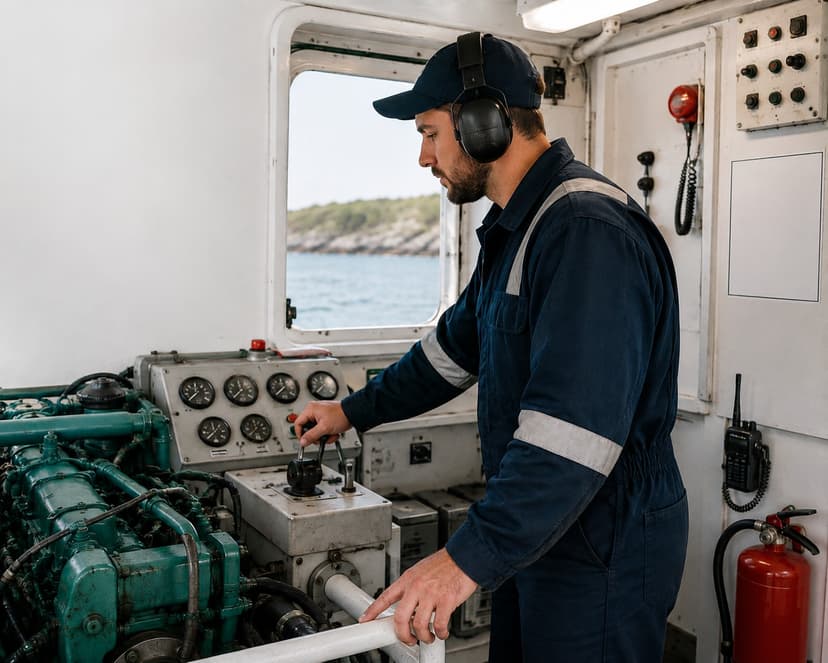
Title: SVMO: Transport Canada clarifies the conditions for recognition of sea service
Transport Canada has updated the clarifications applicable to the Small Vessel Machinery Operator (SVMO) certificate and the Small Vessel Machinery Operator certificate with restrictions (SVMO-R). Beyond a simple summary of eligibility requirements, this guidance raises a concrete operational issue: how sea service is recognized and how operators should document it going forward. This article is intended for commercial vessel owners, Authorized Representatives, masters, and crewing managers who want to structure their employees’ certification pathway.

Fuel Sampling on Board: What SSB 12/2026 Means for Canadian Vessels
Transport Canada published Ship Safety Bulletin (SSB) No. 12/2026 on 10 August 2026. The bulletin sets out Transport Canada’s policy regarding the installation or designation of fuel sampling points on board Canadian ships, in direct relation to the sulphur content requirements of MARPOL Annex VI. It is particularly relevant to shipowners, operators, technical managers and maritime surveyors responsible for compliance with the rules on fuel sulphur content.