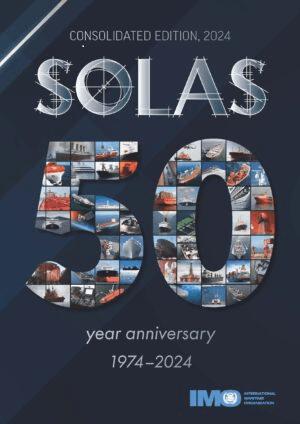
New Amendments to the SOLAS Convention (2025)
New Amendments to the SOLAS Convention (2025)
At its 110th session, held from 18 to 27 June 2025, the Maritime Safety Committee (MSC) of the International Maritime Organization (IMO) approved several significant draft amendments to the SOLAS Convention (1974), in anticipation of their formal adoption in May 2026.
Maritime communications (Chapter IV)
Under new Regulation 5.3, Contracting Governments will be required to use all recognized mobile satellite services for broadcasting maritime safety information via the Enhanced Group Call (EGC) system.
Safety of navigation (Chapter V)
Rule 4: Strengthened obligation for the prompt promulgation of dangers to navigation;
Rule 5: Revision of meteorological protocols to align with the EGC;
Rule 18: Introduction of the VDES (VHF Data Exchange System) into performance standards, with an annual test mandatory for AIS or VDES;
Rule 19: Requirement for AIS or VDES equipment for all ships of 300 GT and above engaged on international voyages; and
Rule 19-1: Exemption from LRIT for ships operating in sea area A1 fitted with VDES or AIS.
Update of safety certificates (Annex)
Model forms P, E and C are amended to reflect the technological alternative between AIS and VDES for navigational equipment.
Implementation timeline
Subject to no objections, formal adoption is planned for May 2026, with entry into force 12 months later, i.e., in May 2027.
Why is this important for convention vessels?
These changes directly affect the technical and operational obligations of ship operators. They also illustrate the evolution of maritime technologies toward increased integration of digital communications and real-time monitoring.
For Canadian vessels subject to SOLAS or operating under the Canadian flag, it is advised:
Monitor TC marine safety bulletins to identify the transposition of international amendments into Canadian law (construction, equipment, navigation, radiocommunications);
Anticipate upgrading equipment (e.g., AIS/VDES) and internal procedures if TC adopts in Canada the amendments described;
Verify that their certificates, equipment and maintenance plans comply not only with international requirements but also Canadian requirements (and that they remain alert to any transition period); and
Stay in contact with TC or their recognized organizations (RO) to ensure that changes to equipment and documentation are compliant as soon as Canadian regulations are updated.
Related Articles
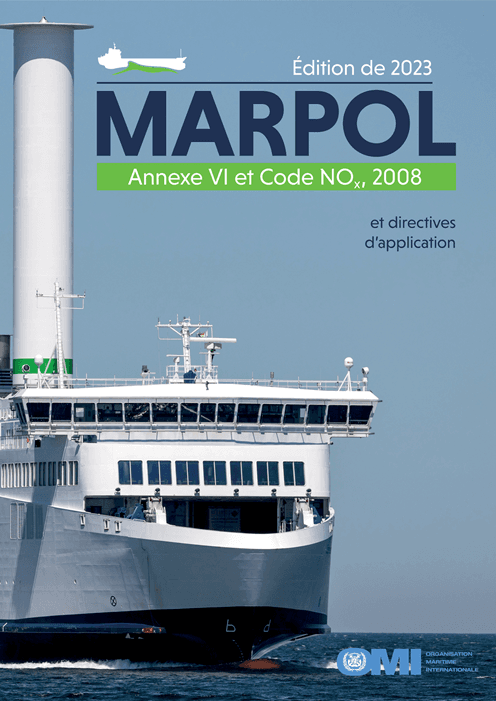
MARPOL Convention: Amendments to Annex VI — 24 October 2025
Use of multiple operational profiles for a marine diesel engine, including clarification of engine test cycles and clarification of entries in data reports required under Regulations 27 and 28; designation of the North-East Atlantic as a new Emission Control Area; accessibility to the IMO Ship Fuel Oil Consumption Database (IMO DCS); and the review clause for the short-term GHG reduction measure. Summary: Outlines measures to refine marine engine compliance and emissions control: enabling multiple operational profiles, clarifying engine test cycles and data reporting under Regulations 27 and 28, designating the North-East Atlantic as a new Emission Control Area, improving access to the IMO fuel oil consumption database, and incorporating a review clause for short-term GHG reduction requirements.
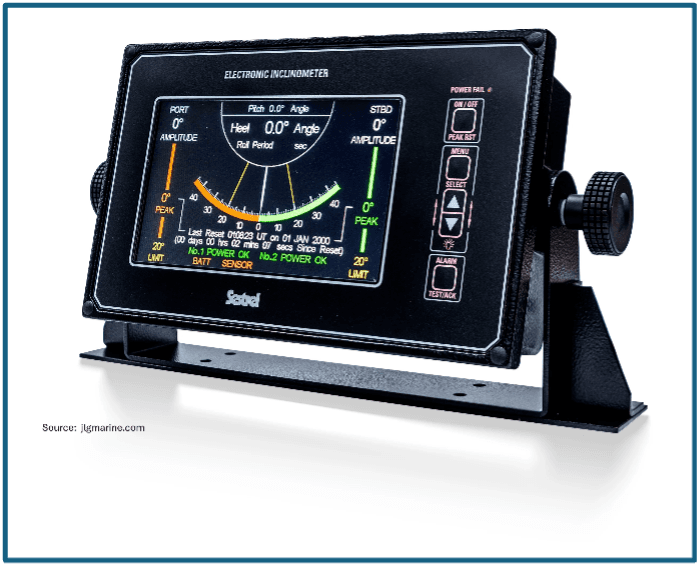
Electronic Inclinometers Required from 2026: What Maritime Professionals Should Prepare
Maritime safety takes another step forward. From 1 January 2026, the IMO (International Maritime Organization) will require the installation of electronic inclinometers on certain new ships. Summary: Starting 1 January 2026, the IMO will mandate electronic inclinometers on specified newbuilds, marking a further advance in maritime safety.