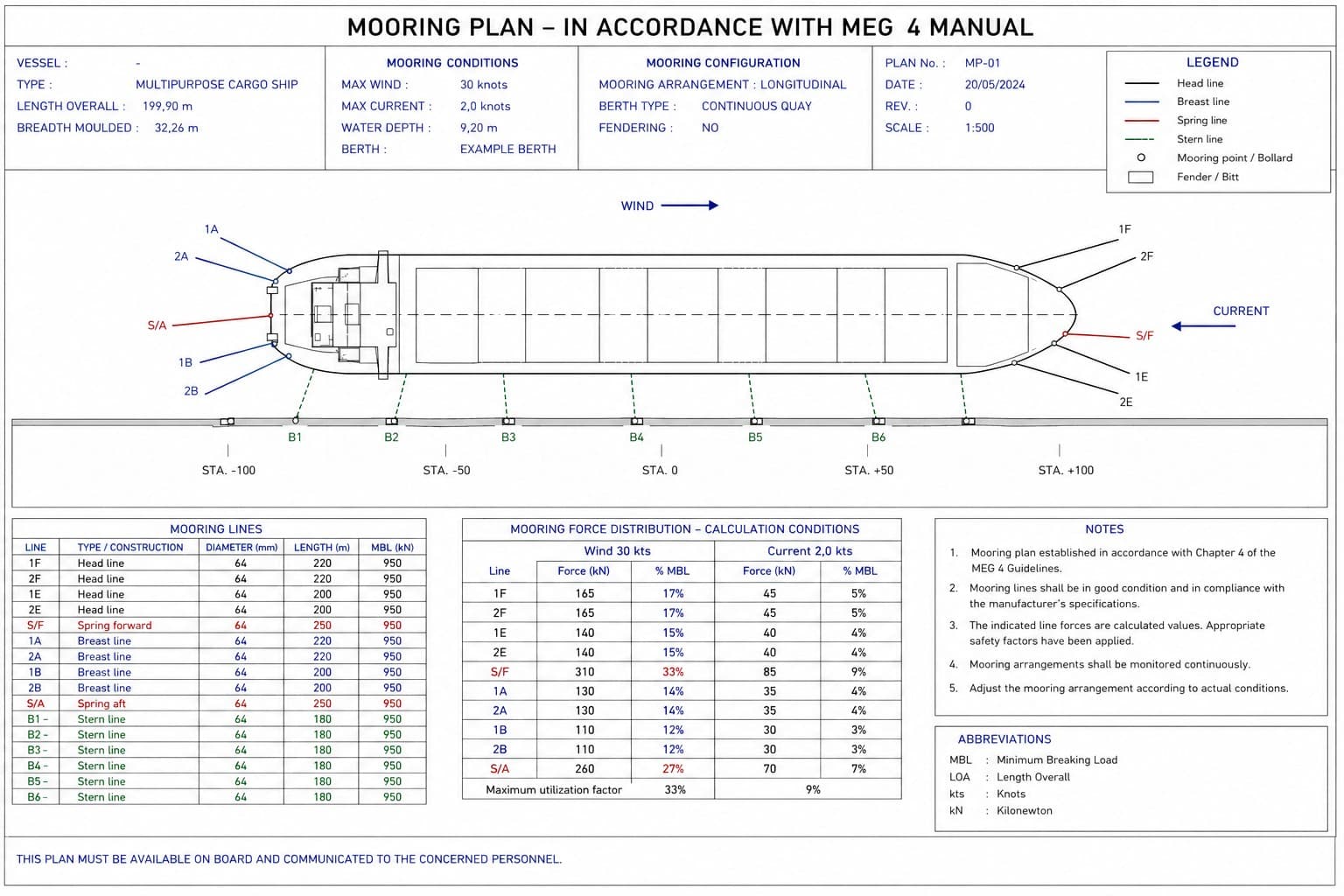
Mooring Lines — A Risk-Based Approach
The safety of mooring operations is a pillar of maritime safety in Canada. The shipowner’s responsibility is engaged under the Canada Shipping Act, 2001. Understanding OCIMF guidelines, especially MEG4, is essential to align practices. Summary: - Mooring safety is foundational to Canada’s maritime safety. - Shipowners are legally accountable under the Canada Shipping Act, 2001. - Familiarity with OCIMF guidance—especially MEG4—is essential to standardize practices.
MEG4: the global technical reference
The OCIMF MEG4 (Mooring Equipment Guidelines) manual was originally intended specifically for tankers and oil terminals. It offers a holistic approach to mooring management:
Design: equipment sizing based on minimum breaking loads (MBL).
Management: mandatory implementation of the MSMP (Mooring System Management Plan).
Maintenance: rigorous tracking of the history and certifications of each component.
The regulatory divide: Convention vessels vs Domestic
In Canada, the rigor of applying these standards depends on the nature of the vessel:
Convention vessels (IMO/SOLAS) : For vessels engaged in international voyages, Transport Canada’s requirements are strict. MEG4 is regarded as the minimum standard to attest to safe operations. The absence of an MSMP or compliant certification documents may result in the detention of the vessel.
Domestic vessels : These vessels (tugs, ferries, vessels operating near the coast) are subject to Transport Canada’s Vessel Safety Regulations. Although MEG4 is not a direct legal requirement, it is used as a standard of good maritime practice.
Canadian environmental challenges
Canada’s geographic reality imposes constraints that transcend a vessel’s regulatory status:
Dynamic forces: Extreme tides and strong currents require continuous tension monitoring.
Climate: Cold temperatures compromise the durability of synthetic materials and require active management to prevent ice formation.
In conclusion: Toward a unified safety culture
The boundary between convention and domestic vessels is fading in risk management. Transport Canada encourages a risk-based approach. Adopting the principles of MEG4 is the best strategy to prevent accidents and ensure seamless compliance.